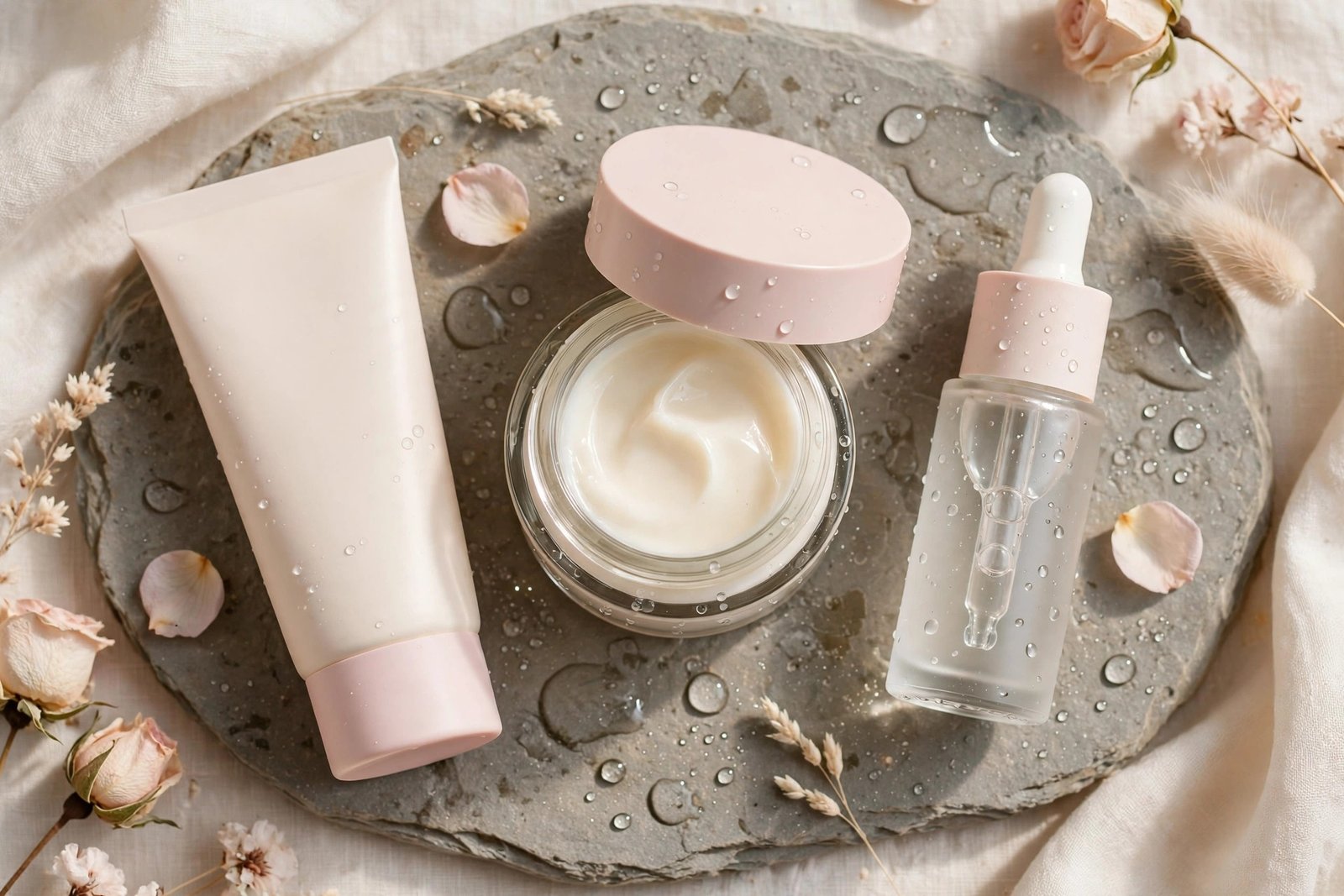
Starting a skincare routine can feel confusing — ten-step K-beauty routines on TikTok, dozens of serums on the shelf, and everyone claiming their product is "the one". The truth is simpler: a good skincare routine for beginners needs only a few steps done consistently. In Pakistan, where garmi brings humidity and sweat, winters bring dry air, and dust and pollution coat your skin daily, keeping things simple is not just easier — it's smarter. This guide walks you through everything from knowing your skin type to building a morning and night routine that actually works here.
Before you shop skincare online, take ten minutes to understand the basics below. Your skin — and your wallet — will thank you.
Step 1: Know Your Skin Type
Every routine starts here. Using the wrong products for your skin type is the number-one reason beginners see breakouts or irritation. Here's how to figure out yours with a simple bare-face test:
- Oily skin: Wash your face with a gentle cleanser, pat dry, and wait one hour without applying anything. If your whole face looks shiny — especially the forehead, nose, and chin (the T-zone) — you have oily skin. This is very common in Pakistan because of the heat and humidity.
- Dry skin: If your face feels tight, rough, or flaky after the one-hour test, your skin is dry. Many Pakistanis develop drier skin in winter, even if they're oily in summer.
- Combination skin: Shiny T-zone but normal or dry cheeks? That's combination — the most common type of all. You may need to treat the zones slightly differently.
- Sensitive skin: If your skin turns red, stings, or itches easily with new products or after sun exposure, it's sensitive. Always patch-test new products behind your ear first.
The blotting-paper trick: Press a tissue on different areas of your face an hour after washing. Oily spots on the tissue show where your sebaceous glands are most active. This quick test helps you pick the right cleanser and moisturizer texture — gel for oily areas, cream for dry ones.
Step 2: The CTM Routine — Cleanse, Tone, Moisturize
The classic CTM routine is the backbone of every beginner routine worldwide, and it works beautifully for Pakistani skin. Three steps, done twice a day:
Cleanser
Cleansing removes sweat, dust, pollution, and excess oil — all of which build up fast in our cities. Oily skin: choose a gentle foaming or gel cleanser with salicylic acid. Dry skin: a creamy, non-foaming cleanser that doesn't strip natural oils. Sensitive skin: fragrance-free, pH-balanced formulas. Wash for about 60 seconds with lukewarm water — hot water dries skin out, and cold water doesn't dissolve oil properly. Cleanse twice daily; once in the evening is non-negotiable after a day in dust and dhoop.
Toner
Forget the harsh, alcohol-heavy toners of the past. Modern toners rebalance your skin's pH after cleansing and give a first layer of hydration. Rose water is a desi classic that works as a gentle toner, while toners with niacinamide suit oily skin and hyaluronic acid suits dry skin. Apply with your palms — cotton pads waste product and can irritate sensitive skin.
Moisturizer
Yes, even oily skin needs moisturizer — skipping it makes your skin produce more oil to compensate. Pick by texture: gel or gel-cream for oily skin in garmi, lotion for combination or normal skin, cream for dry skin in winter. Look for ceramides (they repair your skin barrier) and apply while skin is slightly damp to lock in hydration.
Morning vs Night Routine
Your skin has different jobs in the morning and at night, so the routines differ slightly:
- Morning (protect): Gentle cleanse → toner → moisturizer → sunscreen. The morning routine is all about defense against UV rays, heat, and pollution. Keep it light so your skin doesn't feel greasy by noon.
- Night (repair): Cleanse (double cleanse if you wore sunscreen or makeup) → toner → treatment (like vitamin C or niacinamide, used 2–3 times a week to start) → moisturizer. Night is when your skin repairs itself, so this is when active ingredients do their best work.
Don't add everything at once. Start with the CTM basics for two weeks, then add one active ingredient at a time. That way, if something irritates your skin, you'll know exactly which product caused it.
Pakistani Climate Tips
Skincare advice written for cold Western climates doesn't always fit here. Here's what Pakistani beginners need to know:
- Garmi & humidity: In summer, switch to lightweight gel textures and don't skip sunscreen — sweating it off means you should reapply every 2–3 hours if you're outdoors. Blotting papers are your best friend for midday shine.
- Winter dryness: Northern areas and even cities like Lahore get genuinely dry in December–January. Switch to a richer moisturizer and consider a hydrating serum with hyaluronic acid.
- Dust & pollution: City air leaves a film of grime on your face daily. Never skip your evening cleanse — and if you commute on a bike or in traffic, double cleansing in the evening makes a visible difference.
- Sunscreen is non-negotiable: Pakistan's UV index is high most of the year. A broad-spectrum SPF 50 sunscreen every morning is the single most anti-aging, anti-pigmentation step in any routine. Pigmentation and dark spots — the most common Pakistani skin complaint — are largely sun-driven.
Beginner's Ingredient Glossary
Once your basic routine is settled, these are the active ingredients worth knowing. Introduce them one at a time, 2–3 times a week at first:
- Vitamin C: A brightening antioxidant that fades dark spots and pigmentation, evens skin tone, and boosts sun protection when layered under sunscreen. Use in the morning.
- Niacinamide (vitamin B3): A multitasker — refines pores, controls oil, strengthens the skin barrier, and calms redness. Suits almost all skin types, great for oily Pakistani skin.
- Hyaluronic acid: A hydration magnet that holds many times its weight in water. Apply on damp skin, then seal with moisturizer — otherwise it can pull moisture out of dry air skin.
- Salicylic acid (BHA): An oil-soluble exfoliant that goes inside pores to clear blackheads and prevent breakouts. Ideal for oily and acne-prone skin, 2–3 times a week.
- Retinol (vitamin A): The gold standard for fine lines and texture, but strong — start with a low strength twice a week at night, and never combine with vitamin C in the same routine. Always pair with sunscreen the next morning.
Want to go deeper on any of these? Our beauty guides on our blog cover each ingredient in detail.
FAQs
How long does it take to see results from a beginner skincare routine?
Give any new routine at least 4–6 weeks. Skin cells renew roughly every 28 days, so changes in texture and tone need one full cycle. Pigmentation fades even slower — 8–12 weeks is normal. Consistency beats expensive products every time.
Can I use home remedies like besan or haldi instead of products?
Traditional remedies like besan (gram flour) masks can work as gentle exfoliants, but they're inconsistent in strength and can irritate sensitive skin. A simple, well-formulated routine is more reliable. You can combine both — just don't mix strong actives like lemon or vinegar with your routine on the same day.
Do I really need sunscreen if I'm indoors most of the day?
If you sit near windows or step out even briefly, yes. UV rays pass through glass, and Pakistan's sun is strong year-round. A daily SPF 30–50 takes ten seconds and prevents most pigmentation and premature aging. It's the highest-ROI step in skincare.
Ready to build your routine? Shop beauty products at Kiran Store — curated skincare, serums, and sunscreens picked for Pakistani skin, delivered to your doorstep with cash on delivery.